Boost Your Brainpower and Build Better Recall—At Any Age
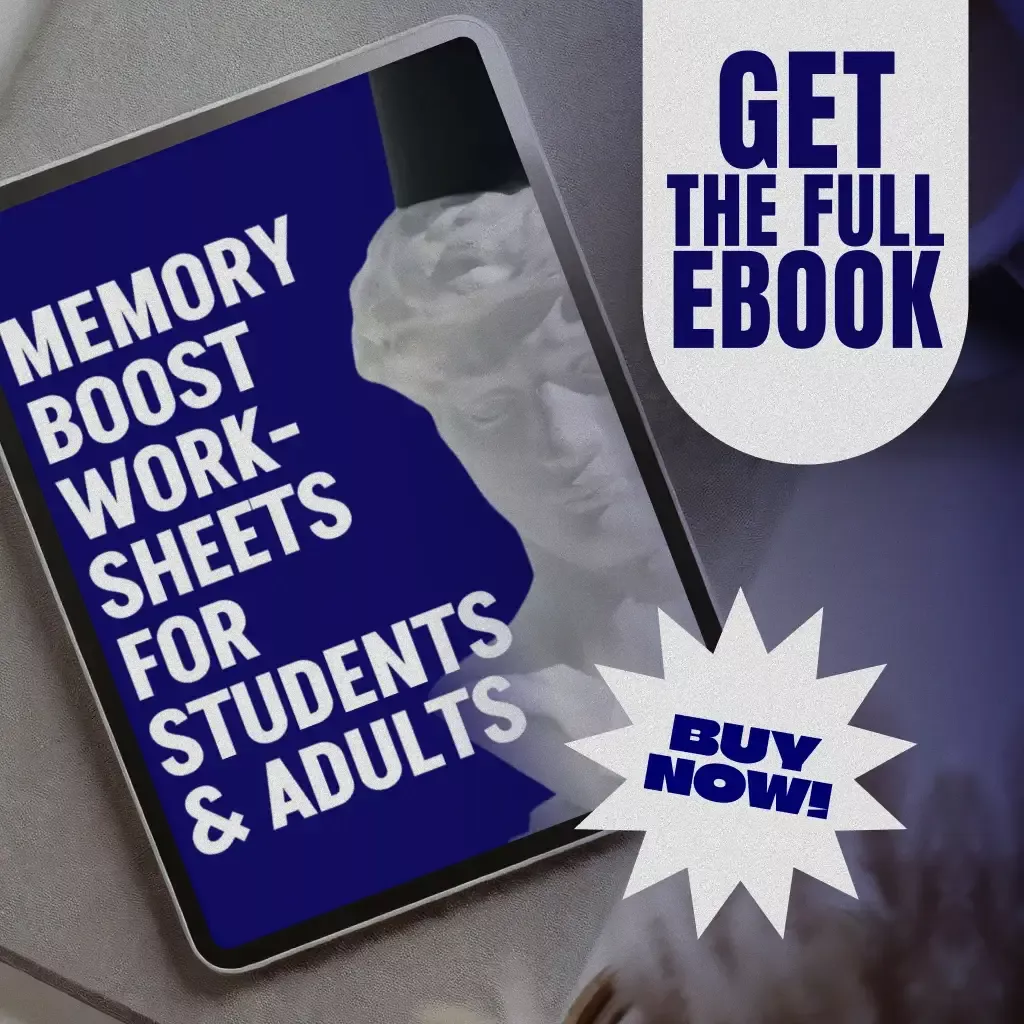
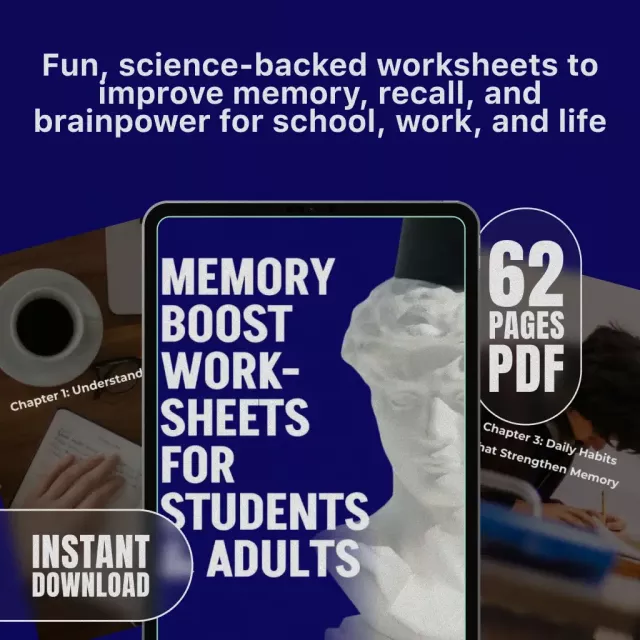
Struggling to remember what you just read? Forgetting names, lists, or study material? The Memory Boost Worksheets for Students & Adults eBook is your all-in-one guide to mastering memory—no matter your age or lifestyle. Designed for busy students, professionals, lifelong learners, and even entire families, this digital download is more than just a guide. It’s a collection of practical memory-enhancing activities suitable for all ages, backed by science and easy to use in daily life. Whether you’re prepping for exams or aiming to stay sharp at work, this resource will help you train your brain and retain what matters.
What’s Inside the Ebook?
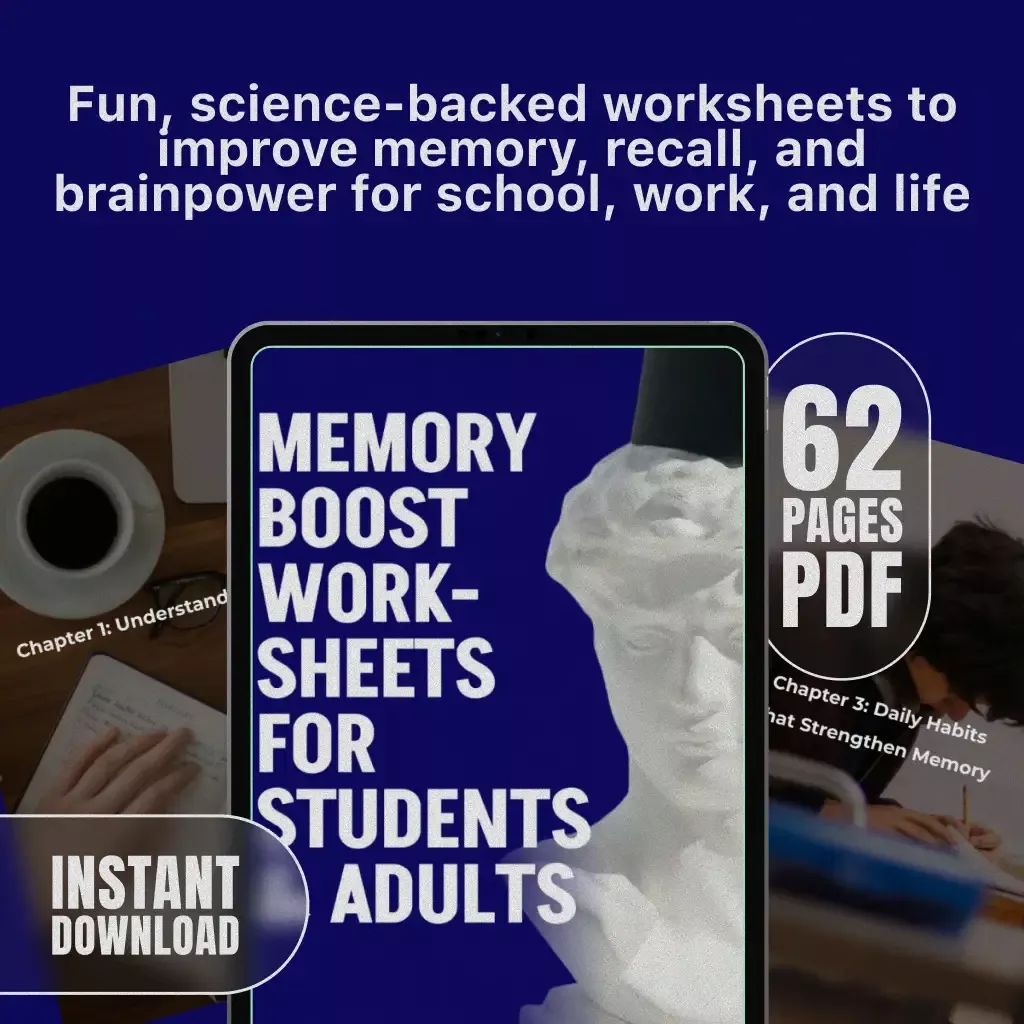
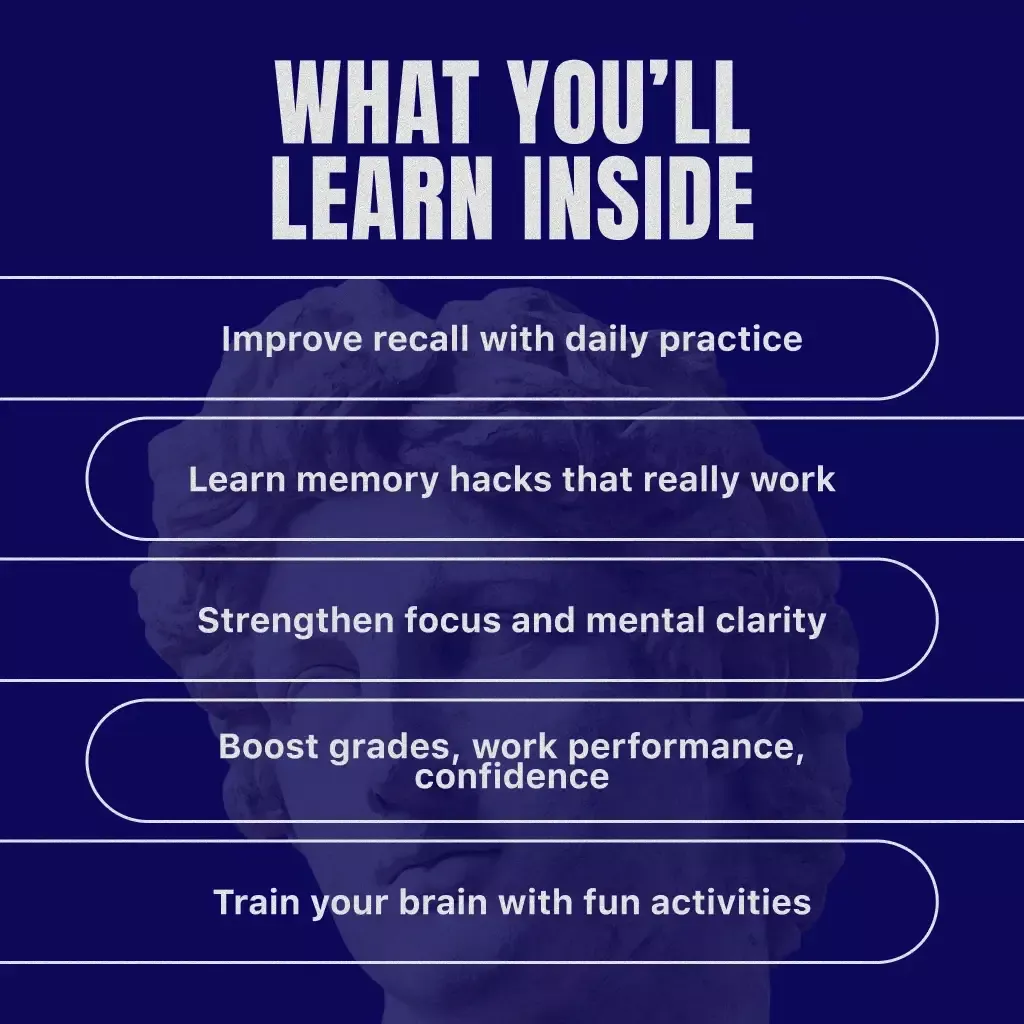
- 10 Chapters packed with insights, habits, and techniques to understand and improve memory
- Step-by-step explanation of how memory works and what helps it thrive
- Daily habit builders including sleep, diet, and stress-reduction strategies
- Over 30 printable worksheets tailored for both students and adults
- Engaging memory games and group activities for all ages
- Digital tools and app suggestions to boost memory without over-relying on tech
- A 30-day personalized memory boost plan with reflection prompts and checklists
Why You’ll Love This Digital Product
- For students: Improve study retention, ace vocabulary, and track progress
- For adults: Strengthen recall for names, tasks, and work projects
- For families: Bond over fun, brain-boosting games and group challenges
- For everyone: Understand your unique memory style and optimize it
- Includes a full collection of practical memory-enhancing activities suitable for all ages
What Makes It Different?
Unlike generic brain games or memory apps, this ebook combines neuroscience with actionable tools you can use immediately. Each chapter builds on the last, helping you understand, train, and enhance your memory step-by-step. The worksheets are beautifully designed, printable, and crafted to meet real-life needs—whether it’s remembering grocery lists, improving exam scores, or rebuilding memory after burnout. It’s practical, proven, and designed to grow with you.
Ready to Transform Your Memory?
Download the Memory Boost Worksheets for Students & Adults today and start your 30-day journey toward stronger recall, sharper focus, and lifelong brain fitness. Whether you’re a student, a busy professional, or someone simply wanting to think more clearly—this ebook has what you need. Grab your digital copy now and unlock the full collection of practical memory-enhancing activities suitable for all ages!
Order cancellation
All orders can be cancelled until they are shipped. If your order has been paid and you need to make a change or cancel an order, you must contact us within 12 hours. Once the packaging and shipping process has started, it can no longer be cancelled.
Refunds
Your satisfaction is our #1 priority. Therefore, you can request a refund or reshipment for ordered products if:
- If you did not receive the product within the guaranteed time( 45 days not including 2-5 day processing) you can request a refund or a reshipment.
- If you received the wrong item you can request a refund or a reshipment.
- If you do not want the product you’ve received you may request a refund but you must return the item at your expense and the item must be unused.
We do not issue the refund if:
- Your order did not arrive due to factors within your control (i.e. providing the wrong shipping address)
- Your order did not arrive due to exceptional circumstances outside the control of finestbuysparlor.shop (i.e. not cleared by customs, delayed by a natural disaster).
- Other exceptional circumstances outside the control of https://finestbuysparlor.shop
*You can submit refund requests within 15 days after the guaranteed period for delivery (45 days) has expired. You can do it by sending a message on Contact Us page
If you are approved for a refund, then your refund will be processed, and a credit will automatically be applied to your credit card or original method of payment, within 14 days.
Exchanges
If for any reason you would like to exchange your product, perhaps for a different size in clothing. You must contact us first and we will guide you through the steps.
Please do not send your purchase back to us unless we authorise you to do so.
Instant download
Your purchase will be available to download once payment is confirmed.
Instant download items don’t accept returns, exchanges or cancellations. Please contact us if you have any problems








I’ve explored quite a few resources in my effort to improve my recall skills, and while many had something useful to offer, this one has stood out for all the right reasons. It’s not just another generic memory guide that ends up collecting dust. Instead, it feels like a thoughtful, well-structured companion that supports you as you work on strengthening your memory. What makes it especially helpful is its personalized approach. Rather than relying on one-size-fits-all techniques, it encourages you to explore and understand how your own memory functions. The strategies are adaptable, which makes the entire process feel more relevant and effective. It's a resource that meets you where you are, rather than expecting you to conform to a rigid system. One of the features I found most valuable is the 30-day plan. It's structured, but not overly strict, and includes reflection prompts that encourage you to think critically about what you’re learning and how you're applying it. These small moments of self-assessment add a deeper layer to the learning process and help reinforce the strategies over time. There are also helpful checklists built into the plan, which make it easy to track progress on a daily basis. It’s satisfying to look back and see how far you’ve come, and it adds a level of motivation that keeps you engaged with the material. Being able to see your development laid out visually helps create a clearer sense of direction. What I appreciated most is that the resource doesn’t try to promise instant results or dramatic changes overnight. Instead, it focuses on building sustainable habits and practical skills that actually make a difference with consistent use. Over time, I’ve noticed a real improvement in how easily I can recall information, and that’s been encouraging. If improving recall has been a challenge for you—as it was for me—this resource is well worth considering. It’s not flashy or overhyped; it’s simply a well-designed, thoughtfully written guide that takes your individual needs into account and gives you the tools to build meaningful progress
As a busy professional, I've found the recall strategies in this resource invaluable. Remembering names and tasks has become much easier - it's like training for your brain!
excellent
I love that this guide isn't just about rote memorization techniques—it really helps you understand your unique memory style and optimize it 😊
👍
A great tool for families too! We’ve had so much fun with the brain-boosting games and group challenges—plus they’re helping us all remember better!
If you're looking for a practical and structured approach to improving your memory, this Memory Boost Worksheets bundle might be just what you need. The 30-day personalized plan stands out with its thoughtful design and detailed structure. It includes not only reflection prompts but also helpful checklists that guide you step-by-step through the process, making it easy to track your progress each day. The variety of techniques and exercises provided ensure that you stay engaged, with enough variety to keep your brain challenged without feeling overwhelmed. Whether you're a student looking to improve study habits or an adult seeking to sharpen your recall, this resource offers valuable tools to make that happen
Amazing guide
This digital resource has been a lifesaver for my studies! The techniques and habits it teaches are so effective. I've seen an improvement in my study retention, especially with vocab. Plus, the printable worksheets make it easy to track progress.
As someone who often forgets names and tasks at work, this ebook has been a godsend. It's helped me strengthen recall significantly. Now I feel more confident during meetings and presentations.
I love that this product isn't just another generic brain game app—it combines neuroscience with practical tools you can use immediately. Each chapter builds on the last which makes understanding memory much easier!
The beautifully designed worksheets are perfect for real-life needs like remembering grocery lists or improving exam scores 😊 They're also printable which is super convenient!
Super helpful 🔥
This eBook really understands your unique memory style and helps optimize it 🧠 It includes daily habit builders like sleep strategies, diet tips, stress-reduction techniques...all things we often overlook but are crucial for good memory.
Loved the 30-day personalized plan—a great way to keep track of progress & reflect on improvements made over time! Downloaded mine today...can't wait to start seeing results 💪
Wow, this digital download is a lifesaver! I've been struggling with memory issues due to my hectic lifestyle. The Memory Boost Worksheets have helped me understand and improve my recall in no time. Love the practical activities too!
This eBook is truly a game-changer when it comes to enhancing your memory. More than just an informative guide, it offers a comprehensive toolkit designed to strengthen your brainpower. From practical memory techniques to engaging exercises, the content is thoughtfully curated to improve your recall abilities in a manageable, step-by-step way. Since using it, I’ve found it much easier to remember names and tasks at work, which has made my daily routine significantly smoother. The clear layout and easy-to-follow methods make it accessible for anyone, whether you're a student, professional, or just someone looking to give their brain a good workout
As a college student, I’m always on the lookout for practical tools to help me retain information more effectively. This eBook has been a valuable addition to my study resources. It’s filled with memory-focused worksheets that are both practical and thoughtfully designed. Navigating through the content is easy, and the exercises are engaging without feeling overwhelming or time-consuming. One of the standout features is the section on daily habit building. The suggestions for improving sleep quality, managing stress, and maintaining a healthy diet have had a noticeable impact on how well I retain what I study. These small lifestyle shifts have added up to a clear difference in my ability to focus and recall information. It’s not a dramatic overnight transformation, but the steady progress is hard to ignore. What I also appreciate is that the eBook doesn’t rely solely on traditional methods. It introduces a few digital tools that complement the memory techniques rather than replace them. These tools are helpful without being overly complex, and they’re positioned as optional supports rather than crutches—which I found refreshing. This balance between old-school strategies and modern tech makes the eBook suitable for different learning styles. Whether you prefer writing things out by hand or using an app to organize your thoughts, there’s something here for you. Since incorporating the techniques into my study routine, I’ve found that I don’t have to rely on last-minute cramming as much. Studying has become more manageable, and I feel more confident going into exams. My performance has improved, and the stress that usually comes with test preparation has noticeably decreased. Overall, whether you're a student or someone simply looking to sharpen your memory for everyday life, this eBook is a thoughtful and well-rounded resource. It doesn’t promise quick fixes but offers solid strategies that can genuinely support better memory retention over time
The step-by-step explanation of how memory works is mind-blowing 🤯 It's backed by science yet so easy to comprehend. Plus, the daily habit builders are super helpful!
Awesome
The 30-day personalized plan has transformed my memory skills completely! Reflection prompts and checklists keep me on track every day 👍
Totally recommend this if you want to optimize your unique memory style. From fun games to stress-reduction strategies - it covers all aspects of brain fitness.
What sets this apart from other resources is its real-life application: whether improving exam scores or remembering grocery lists – it’s got you covered! A must-have for anyone aiming to enhance their cognitive abilities.
🔥🔥🔥
This digital download has been such a help with work projects. I'm remembering names and tasks like never before - it's truly transformed the way I work.
The family bonding over these brain-boosting games has been priceless. We've all had so much fun while improving our memories together! 😊👨👩👧👦
I love how this ebook combines neuroscience with practical tools that you can use right away. Each chapter builds on the last, making it easy to train your memory step-by-step.
I’ve been using the Memory Boost Worksheets for a few weeks now, and I must say, they make memory improvement feel both fun and accessible. The design of the worksheets is visually appealing, and the layout keeps me engaged while I work through the various exercises. They break down memory techniques into digestible steps, making it easier to grasp even the more complex concepts. Whether you're a student looking to improve recall for exams or an adult trying to boost memory for everyday tasks, this collection has something for everyone. The variety of exercises also keeps things fresh, so you never feel like you're doing the same thing over and over again
Highly recommended
Unlike other resources, this one doesn't rely heavily on tech but still offers digital tool suggestions to further enhance your memory skills - a great balance in today's fast-paced world!
What a lifesaver! Struggling with memory recall has been a long-time issue for me, but these worksheets have made such a difference. The daily habit builders are practical and the reflection prompts really help me to understand my progress.
This digital guide is fantastic! I've seen significant improvement in my study retention since using it. Plus, the brain-boosting group activities make learning fun again!
I'm so impressed by this ebook's approach to enhancing memory—it's backed by science and super easy to use. My whole family enjoys the engaging games and we love bonding over them.
👍👍👍
This resource isn't just helpful for students like me prepping for exams; it's also great for adults wanting to strengthen their recall abilities. It’s practical, proven and grows with you—I highly recommend!
I decided to incorporate these Memory Boost Worksheets into my daily routine as part of a 30-day plan to improve my focus and memory, and the results have been impressive! Each day’s exercises are easy to follow and build upon the last, helping me gradually strengthen my recall. Tasks that used to feel challenging, like remembering grocery lists or juggling work projects, have become much simpler. The worksheets are designed in a way that keeps me motivated, and the steady progress I’ve seen has been rewarding. Whether it's boosting focus or retaining information, these worksheets have definitely made a lasting impact on my memory!
These worksheets are beautifully designed—not only do they meet real-life needs like improving exam scores or rebuilding memory after burnout—they're printable too which makes them super convenient! 👍
Wow, this memory boost resource has been a lifesaver! The daily habit builders have made such a difference in my life. I'm sleeping better and feeling less stressed, which is definitely helping me remember things more easily.
Very helpful
The printable worksheets are fantastic - they're beautifully designed and really meet real-life needs. Whether I need to remember grocery lists or improve exam scores, these worksheets got me covered.
This isn’t just an ebook—it’s a full-on memory training program! It even includes digital tool suggestions to help enhance my memory without over-relying on tech. Plus, the 30-day personalized plan keeps me motivated throughout.
What really makes these Memory Boost Worksheets stand out is their versatility—it's a resource that truly works for all ages! As an adult professional with kids who are also students, we've been able to use the activities as a family, making learning and memory training a shared experience. The activities are engaging and adaptable, so whether it's me working on improving focus at work or my kids practicing for exams, everyone can benefit. It's been a fun way for us to connect while also boosting our cognitive skills together. I love how this product bridges the gap between different age groups, creating an enjoyable and collaborative environment for learning 😊
not bad
Super informative 🔥
This isn't just an individual resource - it's perfect for families too! We've had so much fun bonding over the brain-boosting games and group challenges included inside.
The personalized 30-day memory boost plan is fantastic. It really helped me understand my unique memory style and optimize it, all while keeping me engaged with reflection prompts and checklists.
What sets this apart from other resources is its combination of neuroscience with actionable tools you can use right away. Each chapter builds on the last, helping you train your memory step-by-step...it's simply brilliant!
Just finished my 30-day plan and wow! This eBook really helped me improve my memory recall. The daily habit builders are a lifesaver - they've improved not only my memory but also my overall lifestyle.
Life changing 👍
This Memory Boost Worksheets collection is truly a life-changing resource, far beyond a simple guide. The detailed insights into how memory functions have been eye-opening, giving me a deeper understanding of my own brain’s potential. The techniques are not only easy to follow but are designed to boost memory retention in practical ways that fit seamlessly into daily life. Since incorporating these strategies, I’ve found it significantly easier to retain information, whether it's work-related tasks or personal goals. The exercises also keep things fresh and engaging, making the process of strengthening my memory something I look forward to each day 😊
As a student, this has transformed how I study! My vocabulary retention has skyrocketed since using these worksheets. Plus, tracking progress is super motivating 🚀
The group activities included in this digital download are so engaging! They're perfect for family bonding while boosting our brains together 👪🧠💡 Highly recommend!
This digital product has been a lifesaver! The techniques it offers have boosted my brainpower and improved my recall skills. I've noticed a significant improvement in my daily tasks, from remembering grocery lists to acing vocabulary tests.
Clear guidance
The 30-day personalized plan is awesome 😍 Not only did I see improvements in my memory but also in my focus. This resource is not just about boosting your memory, it's about achieving lifelong brain fitness!
If you're looking for a memory resource that goes beyond the typical collection of brain games or surface-level tips, this guide is worth your attention. 😎🔥🔝 It takes a thoughtful, research-based approach by combining insights from neuroscience with practical tools you can apply in everyday life. It’s clear from the start that this isn't about quick fixes—it’s about building lasting, effective memory habits. What really stands out is the way the content is structured. Each chapter builds naturally on the one before it, creating a smooth and logical progression. This makes the learning process feel manageable rather than overwhelming. It’s easy to follow, and yet it doesn’t feel watered down. You actually come away with a strong understanding of the techniques and why they work. One of the strengths of this resource is how it takes complex ideas and presents them in a way that’s easy to grasp. The explanations are clear and concise, but never simplistic. Instead of getting bogged down in technical language, the guide uses relatable examples and breaks things down into small, actionable steps. This makes it accessible without compromising the quality of the information. As the material moves from foundational methods to more advanced strategies, you’ll find that the pace remains steady and the tone consistent. It’s this kind of structure that helps maintain motivation—you feel like you're genuinely progressing, not just flipping through another set of tips. Another thing I appreciated is the straightforward tone. There's no filler, no fluff—just well-researched, well-presented content that respects your time and intelligence. It’s engaging without trying too hard to entertain, and informative without being dry. If you're serious about improving your memory and want a tool that’s both practical and grounded in science, this is a great place to start. It’s not about hype or gimmicks, but about helping you develop real, lasting skills. Whether you're a student, a professional, or just someone who wants to stay sharp, this guide offers value that’s both substantial and sustainable
Must read
This isn't like those generic apps out there. It combines neuroscience with actionable tools that you can use immediately to enhance your memory 🧠💡 Highly recommend for students or anyone looking to improve their cognitive abilities.
Wow, this ebook is a lifesaver! The memory techniques have helped me ace my vocab tests and retain more info. And the daily habit builders? Top-notch!
I'm loving these worksheets for brain training. They're fun, engaging and really help with recall at work. Plus they're printable - so convenient!
This digital download has been great for my whole family. We've enjoyed the brain-boosting games and challenges together - it's a unique way to bond.
Informative
If you're looking to truly enhance your focus and memory, I can’t recommend the 30-day personalized plan enough! It’s been a game-changer for me, offering a clear structure while allowing for customization based on my needs. The reflection prompts are particularly helpful, giving me a chance to assess my progress and adjust my approach as I go along. I’ve noticed a significant improvement in my concentration, and I feel more organized and clear-headed. The plan is both practical and motivational, making it easy to stay committed while seeing real results day by day
As a student, this ebook has been super helpful for improving my study retention! The step-by-step explanation of how memory works really made things click for me. Plus, the printable worksheets are fun and engaging to use. 📚🧠
I'm a busy professional who often forgets names and tasks - not anymore thanks to this digital download! It's packed with practical techniques that have significantly improved my recall. Love the daily habit builders too!
This resource is great for families looking to bond over brain-boosting activities. We've had so much fun challenging each other with the memory games included in it.
Helpful
What sets this product apart from others is its blend of neuroscience with actionable tools that you can start using immediately. It's beautifully designed, easy-to-use, and incredibly effective at enhancing memory!
Just finished my 30-day journey with this memory boost ebook - what a difference! My recall is sharper and I'm retaining more info. Plus, the group activities are great for family time.
🔥
Started using these worksheets at work and they're excellent! They've helped me remember names and tasks much better. Highly recommend to all professionals out there.
Inspiring 👍
What truly stands out to me about this resource is how seamlessly it combines neuroscience with hands-on, practical tools. It’s not just about learning the theory behind memory—it’s about applying that knowledge in a way that feels both productive and meaningful. I’ve found the balance between theory and practice to be the perfect fit for me, especially as someone who values lifelong learning. The exercises are thoughtfully designed to help you understand how memory works while strengthening it in the process. Every session feels like I’m making real, tangible progress toward better brain health and memory retention. This resource is a fantastic way to engage both your mind and your skills at the same time!
Just finished my first week using this digital guide and it's already making a huge difference! The techniques are easy to understand and apply. My recall has improved, especially during exams. 📚🧠
This eBook is the perfect tool for anyone struggling with memory retention. I've noticed an improvement in remembering names and tasks at work - no more sticky note reminders! Plus, the printable worksheets are so handy.
I bought this for my teen and myself—we both enjoy the exercises! Some pages felt a bit repetitive, but the content is practical and motivating. Definitely a good buy! 🤗
Insightful
The personalized 30-day plan was a godsend! It helped me stay consistent with the exercises while tracking progress along the way. This ebook really does help you optimize your unique memory style 👌
So much more than a typical brain training app or book – it combines neuroscience with practical tools that actually work in real life situations like grocery shopping or studying for tests. Loving it!
ok
For anyone who struggles with memory, especially with remembering names, this ebook is a real game-changer. It’s more than just a collection of memory games—it takes a deeper dive into understanding how memory works, which has been incredibly enlightening for me. The practical strategies it provides are easy to implement and have made a noticeable difference in my ability to retain information. I love how the ebook doesn’t just throw techniques at you but helps you understand the science behind them, making it easier to apply them in daily life. Whether it’s remembering names at a social event or recalling important details at work, I’m now able to do so with far less effort. The balance of theory and actionable advice makes this resource truly effective and worthwhile
Empowering 💪
The 30-day personalized plan in this resource is great! I could see improvements in my focus within weeks of starting it. Plus, the printable worksheets are so well designed 👌
Not your average memory improvement guide - this one combines neuroscience with real-life tools that you can start using immediately. Helped me rebuild my memory after burnout without relying on tech.
These worksheets have been a lifesaver for my studies! I've noticed a significant improvement in retention and recall. The daily habit builders are also great for stress management.
This eBook is so much more than just memory games. It's helped me understand how my memory works and given me tools to improve it. Plus, the printable worksheets are beautifully designed!
very practical
I love that this resource isn't tech-dependent - it provides awesome app suggestions without over-relying on them. And the group activities have been such fun bonding experiences with my family.
As an adult learner, these worksheets have helped me strengthen recall for work projects and tasks at hand! It's practical, proven, and grows with you - exactly what I needed.
This eBook has truly been a lifesaver for me! Lately, I’ve been having trouble with remembering even simple things, but the daily habit builders and stress-reduction strategies included in the book have made a remarkable difference. Each exercise is well-designed, not only to enhance memory but also to reduce the mental clutter that often gets in the way. The techniques are incredibly easy to follow, with clear instructions that make them accessible no matter your experience level. I’ve been able to integrate them into my daily routine with ease, and the results have been noticeable. My memory feels sharper, and I’m handling tasks with more focus and clarity than before
Totally worth the money 🔥🔥🔥
I love how this resource caters to everyone - students, adults, families... It's not just about improving memory but understanding your unique style and optimizing it. Great stuff!
This ebook helped me stay focused during exam prep. 👍 The techniques work well! I’d only suggest adding more visuals or diagrams for visual learners. Overall, it’s a great resource!
The step-by-step explanations of how memory works were enlightening for me as an adult learner. And the activities? So engaging! They're fun yet practical ways to boost recall.
Extremely helpful!
Love this digital product! It's not just a guide, it's full of practical activities that have really helped improve my memory. The daily habit builders are easy to follow and the stress-reduction strategies work wonders 😊
The step-by-step explanations on how memory works in this eBook is fascinating. I've learned so much about my own unique memory style and how to optimize it. Plus, the worksheets are beautifully designed and fun to use!
This resource has been amazing for our family. We've bonded over the engaging games and group challenges - all while boosting our brainpower! We're definitely seeing improvements in recall.
As a student, I’ve often struggled with retaining information during my studies, but these Memory Boost Worksheets have made a world of difference. Not only have they helped me improve my memory, but my vocabulary has also expanded in ways I didn’t expect. The exercises are clear and easy to follow, and I’ve seen noticeable progress in my ability to remember key concepts. One of the best features is the ability to track my progress, which has been incredibly motivating—it feels great to see how far I've come. The worksheets offer a balanced mix of techniques that keep me engaged, making studying feel more effective and enjoyable 👍
worth every penny
🔥🔥🔥🔥🔥🔥
This digital download is more than just an ebook, it's a lifestyle change. It has helped me understand my unique memory style and optimize it. My recall for names and tasks at work has significantly improved!
I'm amazed at how much the daily habit builders have changed my life. More sleep, better diet, less stress...my brain feels sharper already.
very informative
Bonding with family over the brain-boosting games was unexpected but absolutely delightful! We're all thinking more clearly now thanks to these engaging activities.
This guide breaks down memory techniques in a very user-friendly way. I’ve learned a lot! I do think some of the exercises could be a bit more interactive. Even so, it’s been a valuable tool I’m glad I found 🙌
Love this digital download! I've been struggling with memory recall, but these worksheets are a lifesaver. The daily habit builders have helped me reduce stress and improve sleep - my brain feels sharper already!
This is more than just an ebook. It's like having a personal trainer for your brain. The step-by-step explanations of how memory works are super insightful, especially the neuroscience parts.
Packed with tips 👍
I’m not typically someone who writes reviews, but I felt compelled to share my experience with this amazing product! The 30-day personalized plan has been a complete game-changer for me. I can’t believe how much my memory has improved in such a short amount of time. The structure of the plan is perfect—it’s simple yet effective, and each day builds on the last in a way that feels natural and rewarding. I’ve noticed a significant improvement in my ability to retain information, whether it’s work-related tasks or everyday things I used to forget easily. This plan has not only boosted my memory but also my overall confidence in how I approach learning and remembering. It’s definitely been worth every minute!
Easy to follow
Love this ebook! The memory-boosting activities are so much fun and really work. My recall has improved dramatically, especially with names and tasks at work.
This product is a lifesaver for students like me. It's helped improve my study retention drastically. Plus, the vocabulary tracking tool is a bonus!
Clear and concise 🙌
Amazing resource for families! We bond over brain-boosting games and challenges—it's become our favorite pastime.
I appreciate the 30-day personalized plan that came with this digital download. Reflection prompts help keep me on track while improving focus and lifelong brain fitness.
nice 👍
I was skeptical at first but this digital download really delivers. It's not just another brain game—it combines neuroscience with practical tools that have made remembering names and tasks much easier for me at work.
This Memory Boost Worksheets collection is an outstanding resource for anyone looking to improve their memory and cognitive skills. Whether you're a student, professional, or just someone eager to sharpen your recall, this eBook offers a variety of practical tools to help you succeed. The exercises are engaging, easy to follow, and tailored to work for all ages. I’ve found the memory techniques not only helpful for boosting focus and retention but also enjoyable to do. With its clear layout and structured approach, this resource is perfect for anyone committed to enhancing their brainpower
❤️❤️❤️
I’m loving these worksheets—they’re beautifully designed, printable, perfect for both students like myself trying to improve exam scores or adults wanting to remember grocery lists better. A definite must-have!
As a student, I found the memory boost worksheets incredibly helpful. The daily habit builders and stress-reduction strategies have improved my study retention significantly. Plus, the digital tools suggested are great for boosting memory without over-relying on tech.
Worth reading 💯
Very helpful
The printable worksheets in this eBook are beautifully designed and tailored for both students and adults. They've been crucial in helping me remember grocery lists, improve exam scores, even rebuild my memory after burnout.
One of the best parts about these worksheets is that they're suitable for all ages! My family has bonded over fun brain-boosting group challenges while also strengthening our recall skills 😊